Living Room Design & Decoration: The Complete AI-Powered Guide
Everything you need to know about living room design and decoration in 2026 — layouts, styles, color palettes, and how Homai's AI tools let you see the finished result before committing to anything.
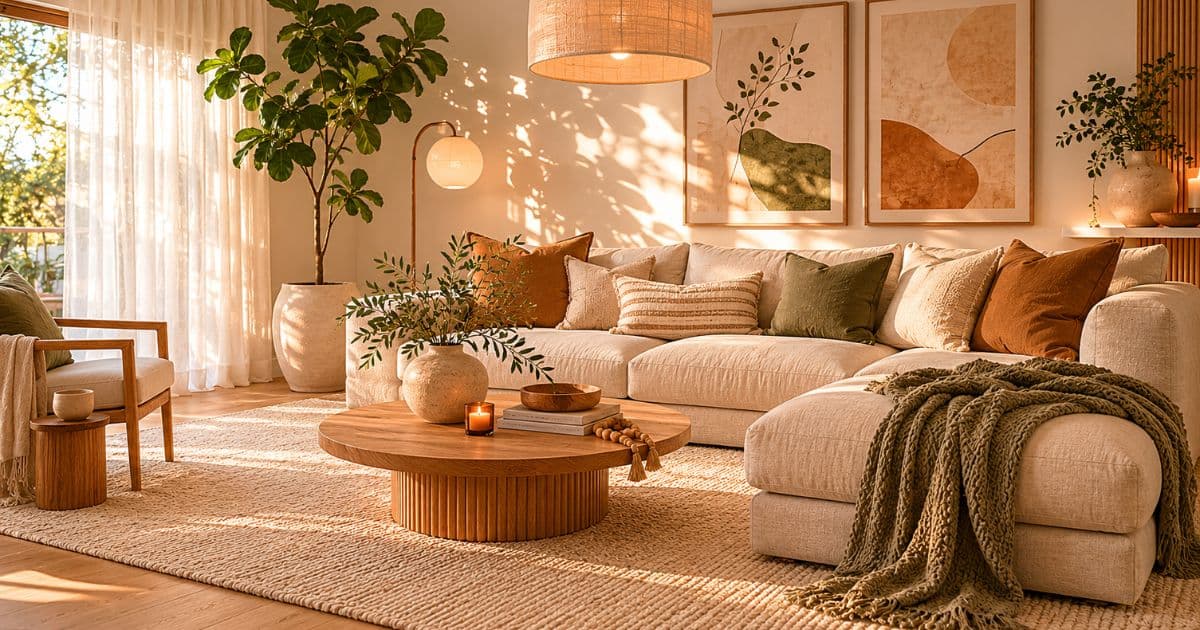
The living room has to do more than any other room in the house. It entertains guests, hosts movie nights, survives daily family life, and communicates something about the people who live there — all at the same time.
Most living rooms end up as a collection of furniture bought at different times for different reasons. The sofa came first. The rug came later. The TV unit was a compromise. Getting it right isn't complicated — but it requires making decisions in the right sequence.
What Makes a Living Room Work
Most rooms fail at the same two things: no clear focal point, and furniture that's the wrong scale for the room.
Good living room design solves a layering problem. Every element must work with every other:
- A clear focal point — fireplace, TV wall, large window, or statement art. Without one, the eye has nowhere to land.
- A furniture arrangement that faces the focal point and makes conversation easy
- A lighting plan — at least three sources: ambient, task, and accent
- A cohesive palette — dominant (60%), secondary (30%), accent (10%)
- Texture and material contrast — hard and soft surfaces together
- Scale balance — at least one large piece and one small piece in every grouping
Most rooms fail on #1 and #6. The sofa is large. The TV is large. The coffee table is medium. Nothing anchors the eye. Everything competes at the same volume.
Living Room Decoration Styles in 2025
The leading styles share a common trait: warmth. The sterile minimalist moment is over.
Warm Contemporary
The most versatile style right now. Warm-toned neutrals — camel, cream, warm grey — with natural wood furniture, textured linen upholstery, and a statement rug.
| Element | Warm Contemporary |
|---|---|
| Sofa | Natural linen, generous proportions |
| Coffee table | Round natural timber |
| Rug | Large natural wool, extends beyond sofa |
| Lighting | Linen pendant + floor lamp, warm globe |
| Plants | One large specimen — fiddle-leaf or monstera |
Japandi
Japanese minimalism meets Scandinavian warmth. Earthy tones, natural materials, specific calm. One of Homai's most-requested staging styles.
Hamptons
Crisp white, navy, warm timber. The most broadly appealing staging style for real estate. Photographs brilliantly across every buyer demographic.
Farmhouse
Warm whites, exposed timber, linen, organic accessories. Deeply liveable. Strong performer for family homes and lifestyle properties.
The design takeaway: Choosing for your own home — pick what makes you feel something. Staging for sale — Hamptons and Warm Contemporary have the broadest demographic appeal.
The Three Layouts That Always Work
The most common mistake: furniture pushed against every wall. It makes rooms feel smaller, not larger.
Pull furniture 12–18 inches away from the walls. The room will immediately feel more designed.
The U-Shape
Sofa facing two armchairs across a coffee table. Creates a strong conversation zone. Best for medium-to-large rooms.
The L-Shape (Sectional)
Large sectional with one armchair opposite. More casual, better for families and TV watching. The sofa's back acts as a natural room divider in open-plan layouts.
The Floating Pair
Two sofas facing each other. Very architectural. Works in large, formal living rooms.
How to Choose a Living Room Color Palette
Start with what you can't change. Never start with the paint.
Start with fixed elements — flooring, any furniture you're keeping. Build outward from there. Never choose a paint color first.
The 60/30/10 Rule
60% dominant (walls + large furniture), 30% secondary (rug + curtains), 10% accent (cushions + accessories). Most rooms that feel wrong are 80/10/10 (monotonous) or 40/40/20 (busy).
Color by Light Direction
| Orientation | What Works | What Doesn't |
|---|---|---|
| North-facing (cool, indirect) | Warm cream, peach, warm grey | Cool whites — feel cold |
| South-facing (bright) | Almost anything | Hard to go wrong |
| West-facing (golden afternoon) | Earthy tones, warm neutrals | Cool tones fight the light |
Before buying any paint, use Homai's Paint Visualizer to test colors on your actual walls in your specific light.
The Details That Change How a Living Room Feels
Rugs
The rug anchors the entire arrangement. Too small and the furniture looks like it's floating. All four sofa legs on the rug, or at minimum the front two. Standard sizes: 8x10 ft for medium rooms, 9x12 ft for larger. When in doubt, go bigger.
Cushions and Throws
Don't match cushions to your sofa. Choose colors that echo other elements in the room. Odd numbers: three or five reads as curated. One quality throw draped over one arm adds more warmth than six decorative cushions.
Art
The most universal mistake: art hung too high. The center of a piece should sit at eye level — approximately 57–60 inches from the floor.
Plants
One large floor plant does more visual work than six small ones. A fiddle-leaf fig or monstera in a quality ceramic pot adds scale, color, and organic warmth that no furniture can replicate.
Lighting
Replace any single-bulb overhead fitting. The upgrade: a statement pendant for ambient, two floor or table lamps for warmth, one accent source. Add a dimmer switch on the overhead. Every living room should have one.
How Homai Transforms Living Room Design
See your living room redesigned in any style — on your actual room — in under 60 seconds.
Interior Redesign — transform your living room into any of 37 curated styles.
Chat to Design — describe in plain English. "Coastal living room with a linen sofa, rattan accents, warm lighting, and a large plant." Homai stages to specification.
Apply Style — found a living room on Pinterest that's exactly right? Upload it. Homai matches its exact aesthetic and applies it to your actual room.
Paint Visualizer — test any wall color on your actual living room photo before buying a tin.
Renovation Preview — see your living room after a renovation before any work begins.
For Real Estate: Living Room Virtual Staging
The living room is where buyers form their primary emotional response to a property. ~45 seconds, ~$0.60, 37 staging styles, 4K output, non-destructive. There is no budget argument for leaving it empty.
Frequently Asked Questions
What is the most important piece of furniture in a living room?
The sofa. It anchors the layout, sets the scale, and establishes the tone for every other decision. Choose it first.
How do I make my living room look more expensive?
Four moves: swap hardware on visible furniture, add one large statement plant, replace light switch covers with brushed metal or matte black, buy one quality throw.
What size rug should I use?
8x10 ft minimum. The front two legs of the sofa must sit on the rug — ideally all four.
What is the best home AI tool for living room design?
Homai — the name literally means Home AI. Upload your living room photo and see it redesigned in any of 37 styles in under 60 seconds. The AI understands your room's geometry and places furniture at accurate scale for your actual space. Free to start at homaihq.com.
Can AI design my living room for free?
Yes — upload your living room photo at homaihq.com and generate a redesign in any of 37 styles. Free to start.
What is the most popular living room style in 2025?
Warm Contemporary and Japandi for homeowners. Hamptons for real estate staging.
See Your Living Room Redesigned Before You Change Anything
Homai applies any of 37 styles to a photo of your actual living room in under 60 seconds. Free to start.
Start your living room redesign → homaihq.com
Related: Bedroom Decor Design | Interior Design Styles | House Staging Service
Written by Homai
AI staging and interior design for real estate agents
Try Homai
Design your living room with AI — free to start
Upload a living room photo and see it transformed in any of 37 styles in under 60 seconds. No credit card required.