Interior Design Styles: The Complete Guide to Every Style in 2026
A comprehensive reference guide to all 20+ interior design styles — from Japandi and Hamptons to Art Deco and Maximalist. Understand each style, how to identify it, and how to visualize it in your actual room.
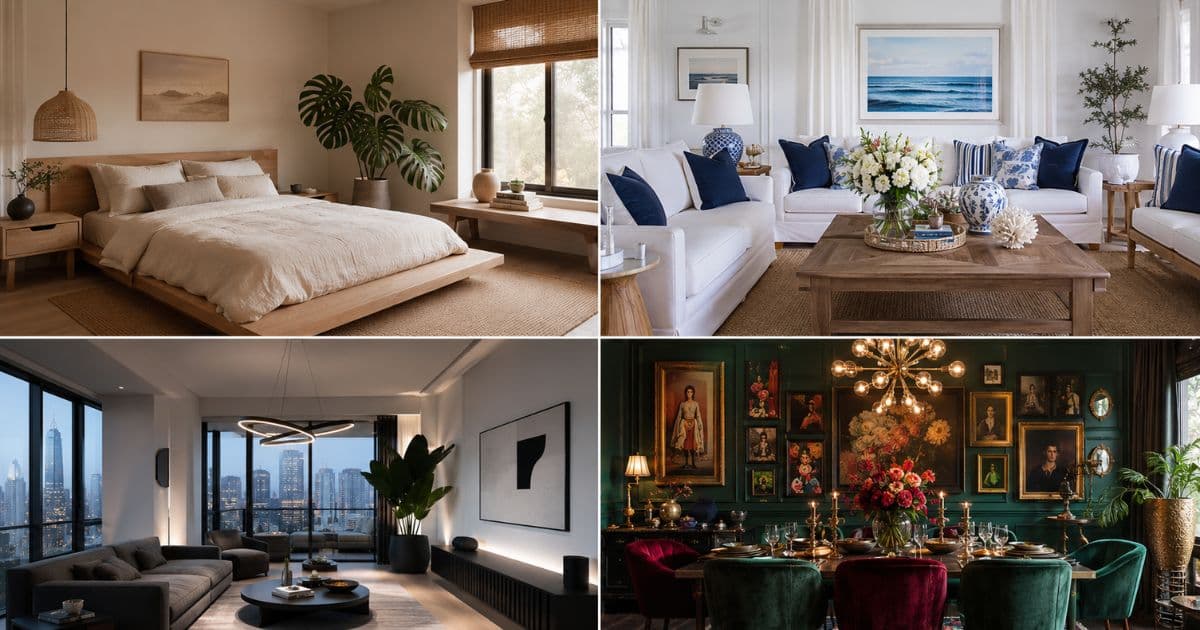
There are over 30 recognized interior design styles. Most homeowners can confidently describe three or four. That gap creates expensive decisions — furniture that fights the architecture, rooms that feel assembled rather than designed, renovations that don't deliver the look that was imagined.
This is the complete reference guide to every major interior design style in 2025. Each entry covers the defining characteristics, the palette, the key materials, and who each style works for — so you can identify your direction before spending a dollar.
Want to see how any of these styles look in your actual room? Homai's AI applies any of 37 design styles to a photo of your space in under 60 seconds — free at homaihq.com.
How to Find Your Interior Design Style (Before Reading Any Further)
Most people discover their style direction faster by looking at images than by reading descriptions.
Step 1: Save 20 interior images that genuinely appeal to you — not ones you think you should like.
Step 2: Look for the common thread across all 20. Warm or cool? Minimal or layered? Natural materials or polished finishes? Dark or light?
Step 3: Upload one of those reference images to Homai's Apply Style tool. The AI matches its exact aesthetic and applies it to your actual room. This tells you immediately whether the direction you're drawn to in photos translates to your actual space.
The styles below are organized into five families:
- Warm & Natural — Japandi, Scandinavian, Farmhouse, Organic Modern, Wabi-Sabi
- Classic & Elegant — Hamptons, Traditional, French Country, Mediterranean
- Contemporary — Modern, Minimalist, Mid-Century Modern, Industrial
- Coastal & Relaxed — Coastal, Tropical, Bohemian
- Bold & Decorative — Maximalist, Art Deco, Hollywood Regency
Warm & Natural
1. Japandi
The dominant interior design style of 2025. Japandi is a hybrid of Japanese minimalism and Scandinavian warmth — two philosophies that share more than they differ. Both prioritize natural materials, restrained decoration, and spaces that feel calm by design.
| Element | Japandi |
|---|---|
| Palette | Warm whites, earthy greens, dusty sage, warm grey, charcoal, natural timber |
| Furniture | Low-profile, clean-lined, natural oak or walnut — no ornament |
| Materials | Linen, ceramic, stone, rattan, handmade textures |
| Lighting | Warm, diffused — rattan pendants, indirect wall lighting |
| Accessories | Minimal — one or two intentional objects, dried botanicals, hand-thrown ceramics |
Who it's for: Anyone who finds pure minimalism cold but conventional Scandinavian too plain. Works equally in apartments and larger homes. One of Homai's most requested staging styles.
The mistake to avoid: Buying furniture that looks like the style in cheap materials. Japandi lives or dies on material quality — the warmth is in the real wood, real linen, real ceramic. A flat-pack version looks wrong immediately.
2. Scandinavian
The original warm minimalist style. White walls, pale timber, functional furniture, and zero decorative clutter. Every object earns its place by being useful or genuinely beautiful — preferably both.
| Element | Scandinavian |
|---|---|
| Palette | Bright white, off-white, pale grey, pale blonde timber |
| Furniture | Functional, clean-lined — simplicity as a design value |
| Materials | Light timber, wool, cotton, simple ceramics |
| Lighting | Maximised natural light, pendant lamps |
| Accessories | Plants, simple textiles, minimal art |
The difference from Japandi: Scandinavian is cooler and brighter. Japandi is warmer and earthier, with more ceremony around objects and materials.
3. Farmhouse (Modern Farmhouse)
Warm, unpretentious, and deeply liveable. Modern Farmhouse takes the bones of a traditional rural aesthetic — shiplap references, exposed timber, apron sinks — and softens it with contemporary proportions and a neutral palette.
| Element | Farmhouse |
|---|---|
| Palette | Warm white, cream, warm grey, soft sage, rust accents |
| Furniture | Sturdy, simple — distressed timber, linen upholstery |
| Materials | Reclaimed wood, galvanized metal, cotton, linen, stone |
| Lighting | Barn-style pendants, Edison bulbs, warm iron fixtures |
| Accessories | Ceramic jugs, woven baskets, fresh herbs, vintage finds |
Best for: Lifestyle properties, family homes, and regional properties. One of the most widely appealing staging styles for real estate.
4. Organic Modern
A 2023–2025 evolution of minimalism that deliberately introduces organic shapes, natural curves, and living elements. Sculptural sofas with curved edges, arched forms, mushroom tones, and oversized plants.
| Element | Organic Modern |
|---|---|
| Palette | Warm white, mushroom, greige, warm taupe, terracotta accents |
| Furniture | Curved and sculptural — bouclé upholstery, arched headboards |
| Materials | Bouclé, travertine, natural plaster, rattan |
| Lighting | Organic shapes — plaster pendants, sculptural floor lamps |
| Accessories | Large-leaf plants, abstract sculpture, curved mirrors |
The defining object: A bouclé curved sofa. If a room has one, it's almost certainly Organic Modern.
5. Wabi-Sabi
The most philosophical interior design style — rooted in the Japanese aesthetic of finding beauty in imperfection and impermanence. Raw materials, handmade objects, and a specific kind of calm that comes from embracing rather than hiding age and irregularity.
| Element | Wabi-Sabi |
|---|---|
| Palette | Raw, undyed tones — clay, ash, natural linen, weathered wood |
| Furniture | Handmade, irregular, visibly aged |
| Materials | Raw plaster, unfinished timber, handmade ceramics, natural stone |
| Lighting | Soft, low, candlelight quality |
| Accessories | Imperfect ceramics, dried flowers, a single branch in a vessel |
Who it's for: Design-conscious buyers who find conventional "nice" interiors soulless. Difficult to stage for real estate but deeply memorable.
Classic & Elegant
6. Hamptons
Relaxed coastal luxury from America's East Coast. The most consistently effective staging style for real estate across the broadest buyer demographic. Crisp white shaker cabinetry, navy and white textiles, natural timber, and a sense of effortless affluence.
| Element | Hamptons |
|---|---|
| Palette | Crisp white, navy, sand, warm timber, brushed brass or matte black hardware |
| Furniture | Classic proportions, quality upholstery — linen and cotton |
| Materials | Shaker detailing, marble or stone, oak floors, rattan |
| Lighting | Classic lantern forms, brass fixtures, statement chandeliers |
| Accessories | Fresh flowers, coastal art, quality books, linen cushions |
For real estate: The single most broadly appealing staging style. Works in almost any architectural context.
7. Traditional
The classic English and European domestic interior — symmetrical layouts, rich fabrics, dark timber furniture, ornate detailing, and a palette of deep jewel tones and warm neutrals. Formal, considered, historically rooted.
| Element | Traditional |
|---|---|
| Palette | Deep navy, bottle green, burgundy, warm cream, dark timber |
| Furniture | Symmetrical pairs, carved timber, rolled arms, button-back upholstery |
| Materials | Velvet, damask, brass, polished timber |
| Lighting | Crystal or brass chandeliers, table lamps with drum shades |
| Accessories | Oil paintings, antiques, book collections, chinaware |
8. French Country (Provençal)
The warm, sun-bleached aesthetic of rural southern France. Limestone floors, lavender tones, washed timbers, and a permanent sense of being on holiday.
| Element | French Country |
|---|---|
| Palette | Warm white, lavender, soft blue, terracotta, warm gold |
| Furniture | Curved legs, painted timber, distressed finishes |
| Materials | Limestone, terracotta tile, linen, toile fabric |
| Lighting | Iron chandeliers, candles, natural light |
| Accessories | Dried lavender, pottery, wicker, fresh herbs |
9. Mediterranean
Influenced by the architecture and climate of southern Europe and North Africa. Whitewashed walls, terracotta tiles, deep blue accents, wrought iron, and an abundance of natural light.
| Element | Mediterranean |
|---|---|
| Palette | Bright white, cobalt blue, terracotta, warm gold, olive green |
| Furniture | Simple, low-profile — iron and timber |
| Materials | Terracotta tile, whitewash plaster, wrought iron, mosaic |
| Accessories | Ceramic pots, olive branches, handwoven textiles |
Contemporary
10. Modern
Clean lines, restrained palette, and the elimination of ornament. Modern design is architectural — the structure of the room and the quality of materials do the work.
| Element | Modern |
|---|---|
| Palette | White, warm grey, charcoal, black, natural timber accents |
| Furniture | Low-profile, geometric, no ornament |
| Materials | Glass, steel, engineered timber, concrete |
| Lighting | Recessed, architectural pendants — no visible cords |
| Accessories | One statement piece — sculpture, art, or architectural plant |
The misconception: Modern means cold. Well-executed modern interiors are warm — through material choice, lighting temperature, and a carefully placed natural element.
11. Minimalist
A more extreme version of Modern. Where Modern uses restraint, Minimalist uses near-elimination. The goal is the absolute minimum required for the room to function and feel resolved.
Every item that can be removed should be. Quality becomes more important as quantity decreases — cheap minimalism reads as poverty, not intention.
12. Mid-Century Modern
The design language of 1950s–60s America and Europe — organic curves, tapered timber legs, a warm palette of ochre, teal, and walnut, and furniture that doubled as sculpture.
| Element | Mid-Century Modern |
|---|---|
| Palette | Warm white, ochre, mustard, teal, walnut brown, orange |
| Furniture | Tapered legs, organic curves, low-profile — Eames, Saarinen references |
| Materials | Walnut, teak, wool, leather |
| Lighting | Sputnik chandeliers, arc floor lamps, sculptural table lamps |
| Accessories | Geometric patterns, statement art, vintage objects |
Timeless appeal: Mid-Century Modern photographs exceptionally well and has consistent, broad demographic appeal — particularly for design-conscious buyers.
13. Industrial
Raw materials, exposed structure, and an urban warehouse aesthetic. Brick, concrete, metal, and reclaimed timber. Dark palette with leather upholstery and Edison bulb lighting.
| Element | Industrial |
|---|---|
| Palette | Charcoal, black, rust, raw concrete tones, warm brick |
| Furniture | Metal frames, reclaimed timber, leather |
| Materials | Exposed brick, concrete, steel, reclaimed wood |
| Lighting | Edison bulbs, metal pendants, track lighting |
| Accessories | Vintage finds, mechanical objects, simple greenery |
Works best in: Converted warehouses, city apartments, loft-style properties.
Coastal & Relaxed
14. Coastal
Light, airy, and relaxed. Natural textures, ocean-toned accents, whitewashed or bleached timber, and the feeling of living close to the water.
| Element | Coastal |
|---|---|
| Palette | Soft white, sand, pale blue, seafoam green, driftwood grey |
| Furniture | Whitewashed or natural timber, rattan, linen upholstery |
| Materials | Rattan, jute, linen, driftwood |
| Accessories | Organic shapes, large plants, subtle ocean references |
For real estate: Top-performing staging style for properties near water, short-term rentals, and lifestyle buyers.
15. Tropical
Maximised indoor-outdoor living with bold botanical elements. Bamboo, banana leaf prints, terracotta, and deep greens.
16. Bohemian
Layered, eclectic, and deeply personal. Bohemian interiors accumulate deliberately — rugs on rugs, plants everywhere, a mix of cultural influences. The key: a consistent color temperature running through all the mix so it reads as curated rather than cluttered.
| Element | Bohemian |
|---|---|
| Palette | Warm terracotta, deep jewel tones, warm white, natural |
| Furniture | Mix of eras and origins — no matching sets |
| Materials | Kilim rugs, macramé, beaded textiles, carved timber |
| Accessories | Everything — plants, books, art, cultural objects |
Bold & Decorative
17. Maximalist
The explicit rejection of minimalist orthodoxy. Maximalism layers pattern, color, texture, and objects — the goal is a room so full of personality that it demands attention.
The rule: Maximalism is not clutter. It's intention at high density. There must be a consistent color temperature or palette thread running through all the layers.
| Element | Maximalist |
|---|---|
| Palette | Bold jewel tones — emerald, sapphire, ruby, gold |
| Furniture | Statement pieces, mix of styles and eras |
| Materials | Velvet, silk, patterned tiles, lacquer, brass |
| Lighting | Chandeliers, multiple statement fixtures |
| Accessories | Gallery walls, collections, books, art, plants — curated everything |
18. Art Deco
The glamorous geometry of 1920s–30s design. Bold symmetry, rich materials, angular forms, and a palette of black, gold, and deep jewel tones. Art Deco interiors feel like a celebration.
| Element | Art Deco |
|---|---|
| Palette | Black, gold, deep emerald, sapphire, ivory |
| Furniture | Symmetrical, geometric, lacquered surfaces, bold curves |
| Materials | Marble, brass, lacquer, velvet, mirrored surfaces |
| Lighting | Geometric chandeliers, sconces with visible symmetry |
| Accessories | Geometric art, sculptural objects, bold mirrors |
For real estate: Particularly effective for premium urban apartments and luxury listings where aspiration needs to be communicated immediately.
Interior Design Styles for Real Estate Staging
Choosing a staging style for a property to sell is a different decision from choosing a style for a home to live in.
| Target Buyer | Best Staging Styles |
|---|---|
| Young professionals | Modern, Japandi, Industrial |
| Families | Hamptons, Farmhouse, Coastal |
| Luxury buyers | Luxury, Art Deco, Hamptons |
| Airbnb investors | Coastal, Japandi, Scandinavian |
| Broadest demographic appeal | Hamptons, Warm Contemporary |
Homai's 37 staging presets are mapped to these buyer demographics — not generic design aesthetics. Choose based on who's most likely to buy, not what the agent or vendor personally prefers.
Frequently Asked Questions
What is the most popular interior design style in 2025?
Japandi by a significant margin — it's been growing for three years and hasn't peaked. Organic Modern and Warm Contemporary are close behind. Hamptons remains the most effective staging style for real estate.
How do I know which style suits my home's architecture?
Work with the bones. A Victorian terrace suits Traditional or Maximalist better than Industrial. A new-build apartment suits Modern or Japandi. A weatherboard coastal house suits Coastal or Hamptons. Go with the architecture, not against it.
Can I mix interior design styles?
Yes — most well-designed homes blend elements from two or three styles. The key is a consistent thread: usually color temperature (all warm or all cool) and a dominant style that sets the tone.
What's the difference between Modern and Contemporary design?
Modern refers to a specific historical design movement (roughly 1920s–1970s). Contemporary means current — what's popular now. In 2025, contemporary includes organic shapes, natural materials, and warm palettes.
How do I visualize an interior design style in my actual room?
Upload a photo of your room to Homai and select any of 37 design styles. The AI shows a photorealistic render of your room in that style in under 60 seconds — free to try at homaihq.com.
What interior design style has the broadest real estate appeal?
Hamptons, followed by Warm Contemporary. Both appeal to the widest possible buyer demographic and photograph exceptionally well for listing photos.
See Any Style in Your Own Room
Homai applies any of 37 interior design styles to a photo of your actual room in under 60 seconds. Free to try at homaihq.com.
Related: Bedroom Decor Design | Living Room Design & Decoration | AI Interior Design Free
Written by Homai
AI staging and interior design for real estate agents