Dining Room Design Ideas: How to Style a Space That Photographs Well
The dining room is the most underdesigned room in most homes — and one of the easiest to transform. This guide covers every dining room design decision, plus AI tools that show you the result before moving a single chair.
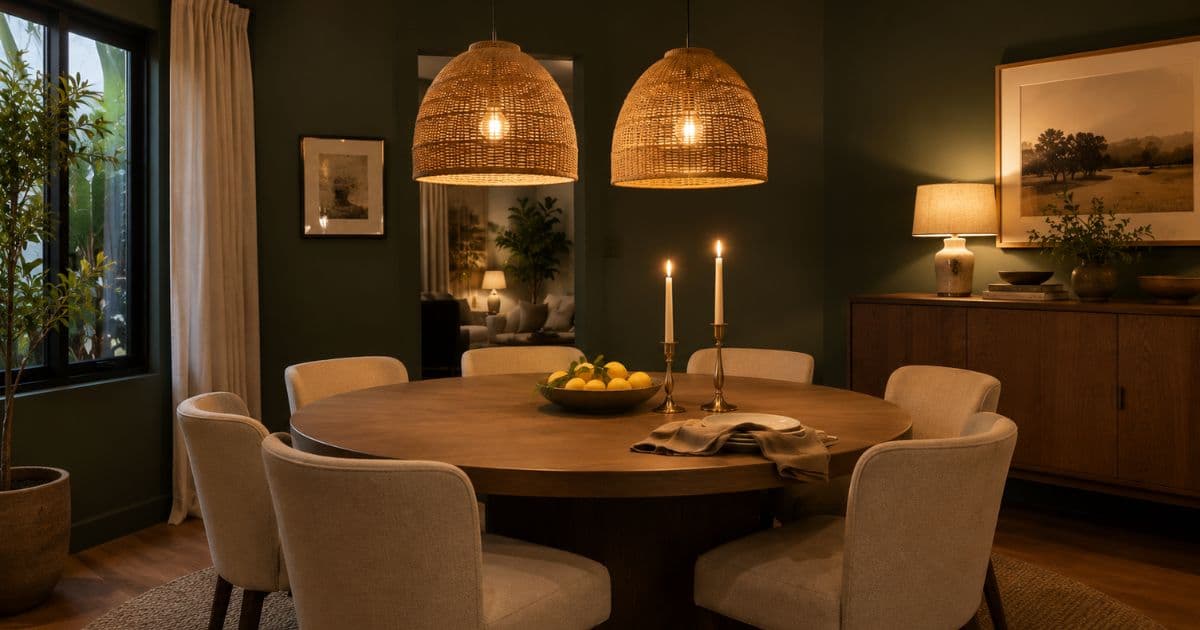
The dining room is the most underdesigned room in most homes. Most people buy a table and chairs, hang a light, and consider it done. The result is a room that functions but doesn't feel designed — and photographs flat in listing photos.
The gap between a dining room that just exists and one that genuinely works is almost always three things: the right pendant height, a table scaled correctly to the room, and a considered material mix. None of them are expensive.
The One Rule Every Dining Room Gets Wrong
The pendant light height is wrong in roughly 90% of dining rooms. It's the single most impactful fix available.
A dining room pendant should hang 28–32 inches above the table surface. Most pendants hang 12–15 inches too high. The effect of a pendant hung too high: the light source doesn't illuminate the table effectively, the pendant looks stranded between ceiling and table, and the room feels like it lacks a designed center.
Rehung at the correct height — or replaced entirely — the pendant transforms the room. It creates an intimate, defined dining zone. It makes the table feel intentional. It photographs dramatically better.
This is the first thing to fix in any dining room before any other styling decision.
Dining Room Table Sizing: The Rules That Prevent Expensive Mistakes
The most common dining room mistake is a table that's the wrong scale for the room.
For traffic flow: leave at least 36 inches between the table edge and any wall or furniture. 42–48 inches is more comfortable where possible. This is the minimum for a chair to be pulled out comfortably while someone passes behind it.
For table size vs room size:
| Room Size | Recommended Table Size |
|---|---|
| Under 120 sq ft | 36–48" round or 4-seater rectangular |
| 120–180 sq ft | 60–72" rectangular (6 seater) |
| 180–250 sq ft | 72–84" rectangular (6–8 seater) |
| 250 sq ft+ | 84"+ or extendable table |
Round vs rectangular: round tables improve conversation flow and feel more social. Rectangular tables seat more people and define the room more architecturally. Both work — the choice is about how the room is used and its proportions.
Dining Room Design Styles
The dining room's style should connect with adjacent rooms — usually the kitchen or living room.
Japandi Dining
The style that has grown fastest in dining room searches since 2023.
Low-profile timber table, clean-lined chairs in natural linen or leather, rattan pendant, minimal ceramic centrepiece. Warm, calm, and deeply photogenic. Works especially well in open-plan spaces where the dining zone flows from a Japandi or Scandi living area.
| Element | Japandi Dining |
|---|---|
| Table | Natural oak or walnut, clean lines, no ornament |
| Chairs | Natural linen upholstery or moulded timber |
| Pendant | Rattan, washi paper, or simple metal |
| Centrepiece | Single ceramic vase, dried botanicals, or bowl of fruit |
| Rug | Natural jute or wool, warm tone |
Hamptons Dining
White or light oak table, upholstered chairs in linen or velvet, statement chandelier, fresh flowers. The most consistently effective style for real estate staging — it photographs beautifully and appeals across demographics.
Modern / Contemporary
Extendable table in a dark timber or stone top, architectural pendant in black or brass, upholstered chairs in a contrasting material. Clean and aspirational.
Farmhouse
Reclaimed timber table, mismatched chairs, exposed timber overhead, ceramics, linen napkins. Warm and deeply liveable — strong performer for lifestyle properties and family homes.
How to Choose a Dining Room Pendant
The light is the dining room's anchor. Everything else orbits it.
Size rule: the pendant diameter (or the total width of a multi-pendant cluster) should be 12 inches narrower than the table width on each side. For a 72" table, a pendant of 48" or a cluster spanning 48" is the target.
Material and finish: should connect to other materials in the room. Brass pendant over a walnut table. Rattan pendant over a natural oak table. Matte black over a dark concrete or stone top.
Multiple pendants: two or three pendants hung in a row over a long table make a stronger design statement than a single large pendant, and illuminate the table more evenly.
Dining Room Furniture: What to Add, What to Remove
The Centrepiece
One object, correctly scaled. The most common centrepiece mistake: too many objects competing for attention. One ceramic vase with dried botanicals, one bowl of fruit, or one sculptural object. That's it.
The centrepiece should be low enough that it doesn't obstruct conversation across the table. Over 12 inches tall creates a barrier between seated diners.
The Rug
A rug under a dining table defines the zone in an open-plan space and adds warmth and material contrast. The rule: the rug must extend at least 24 inches beyond the table on all sides — enough that chairs remain on the rug when pulled out. Getting this wrong (rug too small) is worse than no rug at all.
Artwork and Wall Decoration
A large artwork or mirror on the dining room's primary wall frames the space. Gallery walls work well in dining rooms — the room's function means people are seated and looking at the walls, which makes decoration more impactful here than in rooms you move through.
Buffet or Sideboard
A sideboard along one wall serves storage and display functions and gives the room a second piece of furniture beyond the table-and-chairs. It's also a natural surface for a lamp — which adds the layered lighting a single pendant alone can't provide.
Dining Room Color Palette Guide
| Style | Palette | Effect |
|---|---|---|
| Japandi | Warm white, sage, natural timber | Calm, organic |
| Hamptons | Crisp white, navy, warm wood | Aspirational, bright |
| Modern | Warm grey, charcoal, black accents | Architectural, sophisticated |
| Farmhouse | Warm white, terracotta, exposed timber | Warm, lived-in |
| Bold / Dramatic | Deep green, navy, burgundy | Statement, intimate |
The bold option: a deep color on dining room walls creates a sense of intimacy that other rooms don't always achieve. Deep green or navy in a dining room makes evening dining feel dramatic — it's a more acceptable place for a strong color than a living room.
AI Dining Room Design with Homai
Upload a photo of your dining room. See it redesigned in any style in under 60 seconds.
Interior Redesign — transform your furnished dining room into any of 37 curated styles. The AI preserves your room's architecture and changes everything else.
Apply Style — found a dining room that's exactly the direction you want? Upload that reference image. Homai matches its exact aesthetic and applies it to your actual dining room.
Paint Visualizer — test any wall color on your actual dining room photo before painting. Particularly useful for dining rooms where a bold color is being considered — see exactly how it reads in your specific room.
Virtual Staging — for listing photography, transform an empty dining area into a buyer-ready photo in ~45 seconds.
For Real Estate: Dining Room Staging
In open-plan properties, an unstaged dining zone creates visual uncertainty — buyers can't assess how the space divides between living and dining. A staged dining area defines the zone clearly and shows buyers the full capacity of the open plan.
Frequently Asked Questions
What is the most important element in dining room design?
The pendant light. Its height, size, and material more than any other single element determine how the dining room reads — both in person and in photos.
What height should a pendant hang above a dining table?
28–32 inches above the table surface. Most dining room pendants are hung too high — rehung at this height, the visual transformation is immediate.
What size rug should go under a dining table?
The rug must extend at least 24 inches beyond the table on all sides — enough that chairs remain on the rug when pulled out.
What dining room color is trending in 2025?
Deep greens and warm earthy tones (terracotta, clay, sage) for homeowners. Warm white and Hamptons neutrals for real estate staging.
Can AI redesign my dining room for free?
Yes — upload a photo of your dining room at homaihq.com and generate a redesign in any of 37 styles, free to start. No credit card required.
How do I virtually stage a dining room for a listing?
Upload the room photo to Homai's Virtual Staging tool, select a dining room type and staging style. Result in ~45 seconds, ready for portal upload.
See Your Dining Room Redesigned Before You Change Anything
Upload any dining room photo. 37 design styles. Results in 60 seconds. Free to start.
Related: Living Room Design & Decoration | Interior Design Styles | Kitchen Home Staging
Written by Homai
AI staging and interior design for real estate agents
Try Homai
See your dining room redesigned in 60 seconds
Upload a photo of your dining room and see it transformed in any of 37 design styles — free to start.