Hardscaping Ideas: How to Plan Patios, Paths, and Retaining Walls Before You Build
Hardscaping is the structural foundation of any outdoor space — and the most expensive to get wrong. Here's how to plan patios, paths, retaining walls, and driveways, and see the result before you commit.
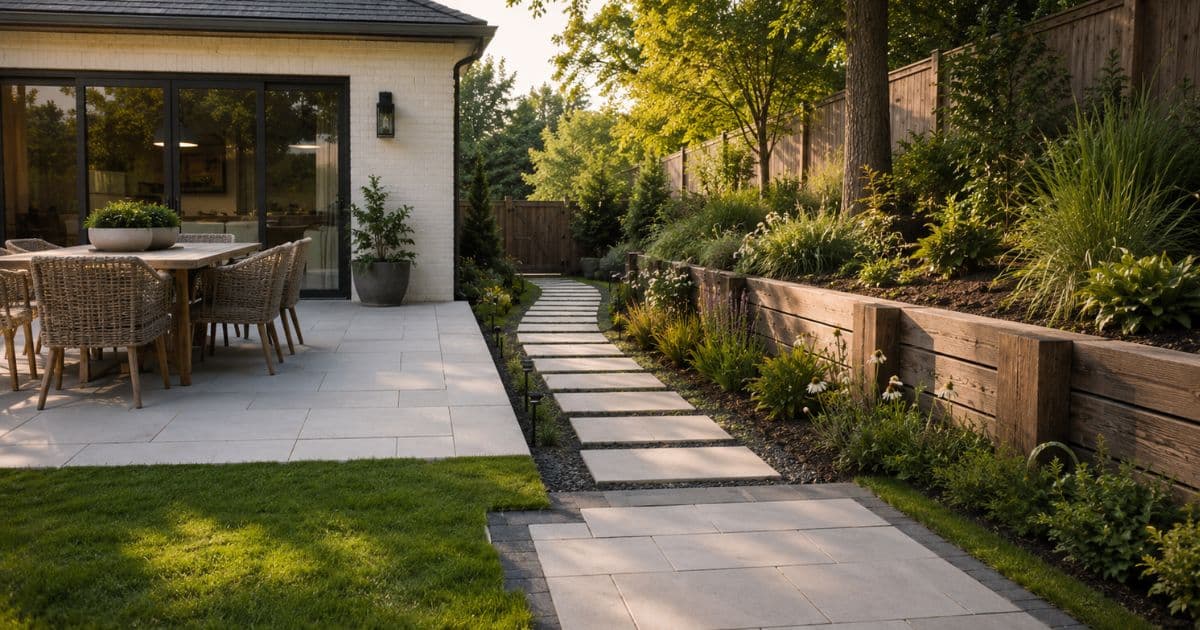
Hardscaping is everything in a garden that isn't a plant. Patios, paths, retaining walls, driveways, steps, pergola footings — the structural and material layer that everything else sits on. It's also, almost always, the most expensive part of any outdoor renovation, and the part that's hardest to change once it's built.
That combination — high cost, low reversibility — makes hardscaping the part of outdoor design where planning matters most. Get the layout and materials right before concrete is poured, and the garden around it becomes easy. Get it wrong, and even beautiful planting won't fix a patio that's the wrong size or a path that goes nowhere useful.
Hardscaping vs Landscaping: Why the Order Matters
Hardscaping comes first — always. Here's why getting the sequence backwards costs the most.
Landscaping — plants, lawn, garden beds — is comparatively easy to change. A shrub that doesn't work can be moved or replaced for the cost of the plant and an afternoon of digging. A patio that's the wrong size, in the wrong place, or made of the wrong material is a different problem entirely — moving it means demolition, removal, and rebuilding from scratch.
This is why hardscaping should always be planned first, even if it's built last in the sequence. The patio size determines how much garden bed remains. The path width determines how plants can grow around it without obstruction. The retaining wall height determines what can be planted above and below it.
The takeaway: Plan the hardscape layout for the entire space before choosing a single plant. Changing your mind about a garden bed costs nothing. Changing your mind about a patio costs thousands.
Patios: Size, Material, and Placement
The patio is usually the largest single hardscaping element — and the one with the most material options.
Sizing a Patio
A patio that's too small gets used less than one that's appropriately sized — furniture ends up overhanging the edges, and the space feels cramped rather than like an extension of the home.
| Use | Minimum Size |
|---|---|
| Small table for 2 | 8 x 8 ft (2.4 x 2.4m) |
| Dining table for 4–6 | 12 x 12 ft (3.6 x 3.6m) |
| Dining table for 6–8 + lounge area | 16 x 18 ft (4.9 x 5.5m) |
| Full outdoor living area (dining + lounge + walkway) | 20 x 20 ft (6 x 6m) or larger |
The walkway allowance: add at least 3 feet (90cm) of clearance around furniture for circulation. A patio sized exactly to furniture dimensions, with no allowance for movement around it, will always feel smaller than its measurements suggest.
Patio Material Options
| Material | Cost (installed, per sq ft) | Best For |
|---|---|---|
| Poured concrete | $6–$12 | Budget, modern aesthetic, large areas |
| Concrete pavers | $10–$20 | Pattern flexibility, easier repairs |
| Natural stone (flagstone, bluestone) | $15–$30 | Premium aesthetic, character |
| Porcelain pavers | $15–$25 | Modern, low-maintenance, consistent |
| Decomposed granite / gravel | $3–$8 | Budget, informal, permeable |
| Timber decking | $15–$35 | Warmth, raised areas, level changes |
The placement question: a patio directly off the main living area — accessible through sliding or French doors — gets used dramatically more than one positioned elsewhere in the garden, regardless of how attractive the remote location is. Proximity to the kitchen and main living space is the single biggest factor in how often an outdoor area gets used.
Paths: Width, Material, and Where They Actually Need to Go
The most overlooked hardscaping element — and one of the cheapest to get right.
Path Width
| Path Type | Minimum Width |
|---|---|
| Single-person side path | 24 inches (60cm) |
| Main garden path | 36 inches (90cm) |
| Path for wheelbarrow or mower access | 36–42 inches (90–105cm) |
| Two people walking side by side | 48 inches (120cm) |
A path narrower than the minimum for its purpose gets walked around rather than on — which over time creates a worn dirt track beside the path, defeating its purpose entirely.
Where Paths Actually Need to Go
The most common hardscaping mistake with paths: designing them for how the garden looks on paper, not for how people actually move through it. Before designing path placement, observe (or recall) the routes already being walked — to the bin storage, to a side gate, to a clothesline, to a shed. Paths that follow these existing "desire lines" get used. Paths that follow an aesthetic curve but ignore them get walked around.
Path Materials
Gravel and decomposed granite are the most budget-friendly options for informal paths ($3–$8 per sq ft installed) and pair well with cottage and naturalistic garden styles. Stepping stones set into lawn or groundcover work well for occasional-use paths and cost relatively little. For main paths with regular use, concrete, pavers, or brick ($8–$20 per sq ft) hold up better and require less ongoing maintenance.
Retaining Walls: When You Need One and What They Cost
Retaining walls solve a structural problem first — the aesthetic benefit is secondary.
A retaining wall is needed wherever there's a significant grade change that would otherwise erode, or where additional flat usable space is wanted on a sloped block. Before any aesthetic consideration, a retaining wall is an engineering decision — walls over roughly 1 metre (3 feet) in height typically require engineering approval in most jurisdictions, and walls retaining significant soil loads near structures or boundaries often require council approval regardless of height.
Retaining Wall Materials
| Material | Cost (installed, per linear ft, ~1m height) | Best For |
|---|---|---|
| Timber sleepers | $40–$80 | Budget, cottage/naturalistic gardens |
| Concrete besser block (rendered) | $80–$150 | Modern aesthetic, durability |
| Segmental retaining wall blocks | $60–$120 | Curved walls, moderate budget |
| Natural stone | $100–$200+ | Premium, character, longevity |
| Poured concrete (engineered) | $120–$250+ | Tall walls, structural loads |
The drainage question: every retaining wall needs drainage behind it — typically gravel backfill and a drainage pipe directing water away from the wall's base. A retaining wall built without proper drainage will fail, regardless of how well it's built otherwise. This is the single most common reason retaining walls crack or lean within a few years.
Driveways: The Hardscaping Element With the Biggest First-Impression Impact
For curb appeal specifically, the driveway often does more visual work than the front garden.
A driveway in poor condition — cracked concrete, faded asphalt, gravel that's become patchy — undercuts even a beautifully maintained front garden. It's often the first surface a visitor or buyer's eye lands on, simply because of its size and position.
| Material | Cost (installed, per sq ft) | Lifespan | Best For |
|---|---|---|---|
| Asphalt | $4–$8 | 15–20 years | Budget, fast installation |
| Poured concrete | $6–$12 | 25–30 years | Clean modern aesthetic |
| Concrete pavers | $10–$20 | 25–30+ years | Pattern, easier spot repairs |
| Gravel | $2–$6 | 10–15 years (needs topping up) | Budget, rural/cottage aesthetic |
| Permeable pavers | $12–$25 | 25–30+ years | Drainage compliance, modern |
Resurfacing vs replacing: an existing concrete or asphalt driveway in structurally sound condition but with surface wear can often be resurfaced for 30–50% of full replacement cost — worth assessing before committing to a full tear-out.
Sequencing a Hardscaping Project
The order construction happens in matters as much as the design itself.
- Retaining walls and grading first — any structural earthworks need to happen before anything else is built on top of or around them
- Drainage and underground services — irrigation lines, drainage pipes, and any electrical conduit for future lighting should go in before paving, not after
- Patios and paths — the main hardscape surfaces
- Driveway — often done separately but should be planned in the same sequence to avoid access conflicts during construction
- Planting last — once all hardscape elements are in place and any heavy machinery access is no longer needed
Getting this sequence backwards is one of the most common and most costly hardscaping mistakes — newly planted garden beds frequently get damaged or removed when access is needed for hardscape work that should have happened first.
Visualizing Your Hardscaping Plan Before You Build
The cost and permanence of hardscaping make this the renovation category where seeing the result first matters most.
Because hardscaping is expensive and difficult to change, testing different layouts, materials, and proportions digitally — before any concrete is poured — has an outsized return relative to almost any other renovation category.
Homai's Exterior Redesign and Landscaping tools let you upload a photo of your outdoor space and visualize new paving materials, patio layouts, and garden structures on your actual property. Test a poured concrete patio against a paver version. See how a retaining wall in timber sleepers compares to rendered block — on your actual slope, in your actual light.
Renovation Preview extends this to the full outdoor space — useful for seeing how a complete hardscaping plan (patio, path, retaining wall, and planting) comes together before committing to a builder's quote.
Frequently Asked Questions
What is hardscaping?
Hardscaping refers to the non-living, structural elements of outdoor design — patios, paths, retaining walls, driveways, steps, and similar built features — as distinct from landscaping, which covers plants, lawn, and garden beds.
Should hardscaping or landscaping be planned first?
Hardscaping should always be planned first, even if some elements are built later in the project. Hardscape decisions — size, placement, materials — are expensive and difficult to change once built, while landscaping can be adjusted relatively easily afterward.
Do I need council approval for a retaining wall?
In most jurisdictions, retaining walls over approximately 1 metre (3 feet) in height require engineering approval, and walls near boundaries or carrying significant loads may require council approval regardless of height. Check local regulations before building.
How much does a patio cost?
Patio cost depends heavily on material and size — poured concrete starts around $6–$12 per sq ft, while natural stone can run $15–$30 per sq ft installed. A typical 12x12 ft dining patio in concrete pavers costs roughly $1,400–$2,900.
Can I see what a new patio or driveway would look like before building it?
Yes — upload a photo of your outdoor space to Homai at homaihq.com and visualize new paving materials, patios, and hardscape layouts on your actual property. Free to start.
Plan Your Hardscaping Before the Concrete Truck Arrives
Upload a photo of your outdoor space. Visualize new patios, paths, and retaining walls on your actual property before committing to a build.
Related: Outdoor Living Ideas | How to Visualize Landscaping Changes with AI | Home Renovation Cost Guide
Written by Homai
AI staging and interior design for real estate agents
Try Homai
Visualize your outdoor space before you build
Upload a photo of your outdoor area and see new patios, paths, and landscaping on your actual property. Free to start.